
How to Prepare for a US IT Interview: From Recruiter Call to Final Round (2026)
Most people spend all their time on the technical questions. Then the recruiter asks about their rate or start date, and they freeze. Or they get asked to introduce themselves and talk for five minutes without saying anything useful
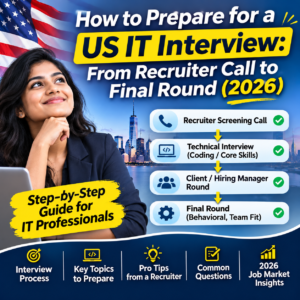
A US IT interview usually has several steps, and each one tests something different. Here’s how the process normally goes, and what to do at each stage How to Prepare for a US IT Interview
The short answer
How to Prepare for a US IT Interview Most US IT hiring has four stages: a recruiter call, a technical screen, interviews with the team, and a final step like a manager chat and background check. To prepare, write a clear 60-second introduction, know your resume inside out, practice your main skills out loud, and have honest answers ready for pay, start date and work authorization. Contract roles often move faster and may skip some stages.
Stage 1: The recruiter call
This is usually a 15 to 30 minute phone or video call. The recruiter wants to know if you fit the job and if you can actually take it. Expect questions about:
- Your recent projects and main skills
- How many years you’ve used the key tools in the job post
- Your work authorization, and what type of contract you can do
- Your location and time zone
- Your expected pay rate
- When you can start
How to Prepare for a US IT Interview Start with your introduction. Keep it under a minute: who you are, how many years of experience you have, your main skills, one result you’re proud of, and what kind of role you want. Say it out loud a few times until it sounds like talking, not reading.
Know your rate before the call. If you’re not sure what the market pays, check similar job posts first. Be honest about your work authorization too. Don’t say yes to a contract type your visa doesn’t allow just to keep the conversation going. Our guide to C2C vs W2 vs 1099 explains the differences.
Stage 2: The technical screen
This can be a coding test, a live problem or a set of technical questions. It usually lasts 30 to 60 minutes. Here’s how to get ready:
- Read the job post and list the five skills it mentions most. That’s your study list.
- Practice solving problems out loud. Interviewers want to hear how you think, not just see the answer.
- If you get stuck, say what you’ve tried and ask a question. Going silent is worse than saying “I’m not sure, but here’s my thinking.”
- Test your camera, microphone and internet the day before.
For data, cloud and DevOps roles, expect questions about tools you’ve used on real projects. Be ready to explain why you picked them, not just what they do.
Stage 3: Team interviews
There may be one to three rounds with engineers or the hiring manager. You’ll get a mix of technical depth, questions about past projects, and behavioral questions that start with “Tell me about a time when…”
Use a simple structure for those answers: the situation, what you did, and the result. Prepare three or four short stories ahead of time:
- A hard problem or outage you fixed
- A time you disagreed with someone and how it ended
- A time you had to learn something fast
- A project you’re proud of
Keep each story under two minutes. Say “I” when you talk about what you did yourself, and give the team credit where it’s fair.
Also prepare two or three questions of your own. Good ones are: What does a good first 90 days look like? How big is the team? How is work reviewed? For contract roles, you can ask how long the project has been running and whether extensions are common.
Stage 4: The final steps
This is usually a short chat with a manager, followed by an offer, a background check and paperwork. For a contract role through a staffing firm, you’ll confirm your rate, start date and contract terms.
Read the agreement before you sign. Make sure the rate, payment schedule, end date and your responsibilities are written down. If anything is vague, ask. It’s much easier to fix a contract before you start than after.
The day before
- Re-read the job post and your resume
- Write down your three questions
- Test your tech and pick a quiet spot
- Dress neatly. Business casual is common for video interviews
- Join five minutes early, not twenty
Common mistakes
- Not knowing your own resume. Everything on it is fair game, so be ready to explain every tool and project.
- Claiming skills you don’t have. One follow-up question will show it.
- Speaking badly about a past employer. Stay neutral and talk about what you learned.
- Giving very long answers. If you’re past two minutes, you’ve said too much.
- Having no questions at the end. It can look like you aren’t interested.
- Skipping the thank-you note. It takes two minutes and it’s a good habit.
After the interview
Send a short thank-you email within a day. Two or three sentences is enough: thank them, mention one thing you liked about the role, and say you’re still interested. If you haven’t heard back in a week, send one polite follow-up. Then keep applying, so you’re not waiting on a single answer.
Frequently asked questions
How long does the US IT hiring process take? It varies. Contract roles can move in a few days to a couple of weeks. Full-time roles often take longer, sometimes several weeks. The recruiter can usually tell you what to expect.
Should I bring up pay first? It’s usually better to let the recruiter ask, but have your number ready. If they ask early, give an honest range based on the market and your experience.
What if I don’t know the answer to a technical question? Say so, then explain how you’d go about finding the answer. Interviewers often care more about how you think than whether you know everything.
Can I ask about the interview format beforehand? Yes. Recruiters are usually happy to tell you how many rounds there are and what each one covers.
Ready to put this into practice? Browse current openings on our jobs page and apply to the roles that fit your skills.

1 thought on “How to Prepare for a US IT Interview: From Recruiter Call to Final Round (2026)”